Winter Evening Warmth Checklist for Cozy, Restful Nights

Winter evenings ask more of us than summer ones. The light leaves at four, the radiators come on with a knock, and the air indoors slowly turns into a very polite desert. Getting to bed warm and genuinely settled isn't complicated, but it does take a handful of deliberate moves — small ones, made in the hour or two before you turn in. What follows is a seasonal checklist: the warmth, the moisture, the lighting, the drink in your hands, and the bed you finally climb into. Take the parts that suit your home. Leave the rest for another winter.
Warm the Room You're In, Not the Whole House
The trick to a comfortable winter evening is heating the space you're actually sitting in, then letting the bedroom stay a little cooler. Close the door on the rooms you've left. A smaller warm room beats a large lukewarm one every time.
Before you settle in, walk the edges of the room and find the draft. It's usually under the door, along the window frame, or through a keyhole you'd forgotten about. A rolled towel at the base of the door costs nothing and works tonight. Heavier curtains drawn at dusk keep the warmth in and the cold glass away from your ankles.
Two small habits make a difference. First, keep curtains and long sofas from sitting in front of radiators — a radiator that's covered is a radiator wasting heat. Second, warm yourself, not just the air. Thick socks, a jumper you keep for evenings, a blanket on the back of the chair. Feet are the fastest route: cold feet keep the rest of you restless, which is why a hot water bottle at the foot of the bed works so well in the ten minutes before you get in.
The bedroom itself should end up warm enough for bare feet and cool enough that you want a duvet. If you're overheating at two in the morning, the room is doing too much, not too little.
Deal With Dry Air Before It Wakes You
Dry indoor air announces itself quietly: static in your hair, a scratchy throat at three in the morning, lips that crack by Friday, wooden furniture that starts clicking as it dries. Heating air lowers its moisture content, and a sealed room makes it worse.
- A damp towel on a drying rack is the least expensive humidifier there is. Wash it, wring it, hang it near (not on) a radiator.
- A bowl of water on the radiator shelf works slowly and steadily. Keep it out of reach of children and pets.
- Group a few houseplants in the room you use most. They release moisture and give the corner something to do.
- Dry the laundry indoors on wet evenings instead of running a separate appliance for the job.
- If you use a humidifier, aim for moderate humidity rather than a tropical rainforest, clean the tank regularly, and check the level with an inexpensive hygrometer.
Balance matters more than volume. Condensation running down the windows in the morning is a sign you've overdone it. Open a window for five minutes before bed to exchange the air, then close it again. If you have asthma or another respiratory condition, ask a health professional what humidity level suits you rather than guessing.
Layer the Light Instead of Flooding the Room
Bright overhead lighting at nine at night tells your body it's still afternoon. The fix isn't a dark house; it's layers.
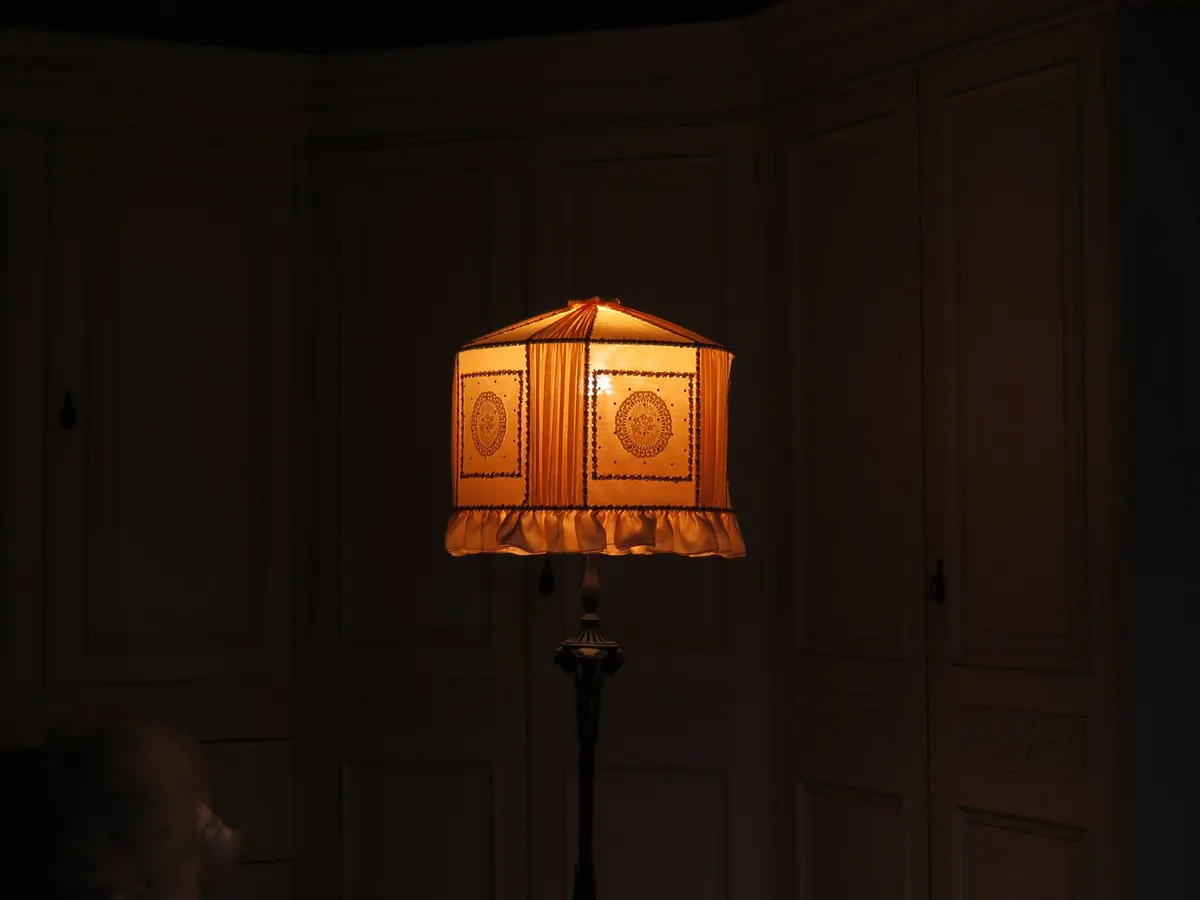
Switch off the ceiling light after dinner and turn on two or three smaller sources instead: a floor lamp in the corner, a table lamp beside the chair, a small lamp on the bedside table. Choose warm bulbs, the kind that read as yellow rather than blue-white. Light that comes from below eye level feels calmer than light that comes from above.
Keep dimming as the evening goes on
At eight, you might have the main lamp and the corner lamp on. By ten, just one — the lowest one in the room. If you're reading on a screen, drop the brightness, turn on the warm-tone setting, and put something else between you and the last half hour. A paper book and a single lamp is the oldest sleep aid there is, and it still works.
In the bedroom, a small lamp you can reach without getting up is worth more than a beautiful overhead fixture you never use. If early daylight wakes you in summer, fine — in winter, the problem is usually the opposite: a room so bright at bedtime that your eyes never get the message.
Make the Last Drink a Ritual, Not a Habit
A warm drink in your hands does something a glass of water can't: it slows the evening down. The trick is timing. Aim for an hour before bed, and keep the cup small — a large mug at ten means a bathroom trip at two.
Chamomile, mint, ginger with honey, warm milk, or cocoa made with less sugar than the tin suggests. If you drink tea with caffeine, move the last cup to mid-afternoon; caffeine lingers longer in the body than most people expect. Alcohol is worth a mention too, because it feels warming and then quietly breaks the night into pieces. A glass with dinner is one thing; a nightcap right before bed rarely produces the sleep it promises. If you're managing a health condition, are pregnant, or take regular medication, check the specifics with a doctor rather than working from general advice.
Build a Bed That Breathes
One heavy duvet is usually worse than two lighter layers. Layers let you adjust at two in the morning without rebuilding the whole bed, and natural fibres such as cotton, linen and wool handle moisture better than synthetic fills, which can leave you clammy.
A cotton or linen sheet against the skin, a wool or flannel layer for the coldest weeks, and a duvet on top is a flexible setup. Flannel sheets feel wonderful in December and oppressive by March, so store them rather than suffer them. If you use a hot water bottle, fill it, check the seal, wrap it in a cloth, and take it out before you fall asleep. Electric blankets are best used to pre-warm the bed and switched off before you get in, following the manufacturer's instructions.
Air the bed each morning — pull the duvet back for twenty minutes while you dress. And if you wake cold rather than hot, add a layer to the bed instead of turning the radiator up. It's easier to remove a blanket than to cool a room.
A Ten-Minute Sequence for the Hour Before Bed
- Close and check. Curtains drawn, door closed, draft blocked. Thirty seconds.
- Drop the big light. Switch to the lowest lamp in the room and leave it there.
- Top up the moisture. Fresh damp towel on the rack, or a splash more water in the bowl.
- Kettle on, small cup. Drink it sitting down, not standing in the kitchen.
- Warm the bed. Hot water bottle in, wrapped, under the covers.
- Close the day. Phone on charge in another room, tomorrow's clothes out, one thing written on the list.
- Read until heavy. Paper if you can, dim lamp, no screen within reach.
Adjust One Thing, Then Leave It Alone
If you wake with a dry throat, add moisture. If you wake cold at four, add a layer to the bed, not degrees to the radiator. If you can't settle at all, the light was probably too bright or the drink came too late. Change one variable, give it three nights, and see what happens before you change anything else.
Write the short version on a card and stick it inside a cupboard door: draft, lamp, kettle, water, bed. Winter evenings don't need to be elaborate. They need to be repeatable — a routine you'll run on a Tuesday when you're tired, without thinking about it.
Photo: JillWellington / Pixabay